Most people think comfort in an RV comes down to whether they physically fit. Can you stand up. Can you stretch out on the bed. Can you move around without hitting your head.
Those questions matter, but they’re not what usually causes regret.
Discomfort in small living spaces rarely comes from absolute size limits. It comes from repetitive strain… The small, constant adjustments your body has to make throughout the day.
A tall person ducking once is fine. Ducking dozens of times a day is not. A tight aisle that feels acceptable during a walkthrough can quietly wear you down when you pass through it every hour. Over time, those micro-adjustments add up, and that’s when fatigue and irritation start to show up.
This is why comfort tends to break down weeks into ownership, not minutes into a showroom visit.
Most RVs and vans are designed around average bodies. That isn’t a flaw. It’s a necessity. But it does mean that people who are taller, broader, or heavier than average will feel design compromises sooner and more intensely. Narrow seating, short beds, low transition points, and awkward angles don’t just feel inconvenient. They create ongoing physical stress.
The mistake buyers often make is evaluating comfort as a static experience instead of a dynamic one.
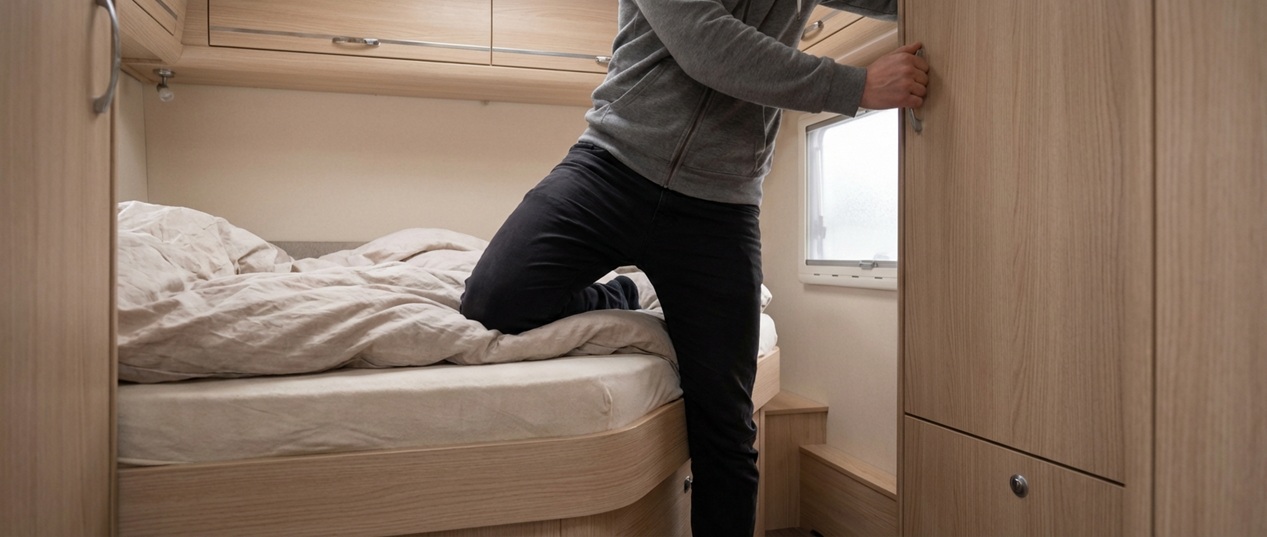
Standing height looks good on a spec sheet, but transition height is what matters in daily life. It’s the step into the bathroom, the lean over the counter, the twist into bed, and the posture of a seat that determines whether your body feels fine at the end of the day or quietly worn down.
Time amplifies everything.
A weekend trip hides problems. A few long days inside during bad weather exposes them. What felt tolerable at first becomes something you have to work around. And once you’re working around your own living space, comfort turns into friction.
This shows up even faster with couples.
Two people sharing a constrained space don’t just double the usage. They compound it. One person’s workaround becomes the other person’s daily friction. That’s why comfort issues often show up as “layout problems” when they’re really human-factors problems.
None of this means bigger is always better. It means comfort should be evaluated based on how often your body has to adapt, not whether you technically fit.
The more useful question isn’t “Can we live in this.”
It’s “Where will our bodies be stressed, repeatedly.”
Understanding that difference early saves money, frustration, and disappointment later.