Winter RV travel has a way of forcing an honest conversation.
Not about skill.
Not about gear.
But about choice.
Because unlike daily commuters, most RVers aren’t required to be on the road. That changes everything. The first and most important winter driving decision usually happens before the engine ever starts.
Should you even be moving today.
For many RVers, the safest winter driving strategy is knowing when to stay put. Weather windows matter more than schedules. Snow itself isn’t usually the problem. It’s rushing into it. Or assuming you can “just take it slow” without fully accounting for stopping distance, wind, weight, and traction.
If the forecast looks questionable and you have flexibility, waiting a day is often the smartest move you’ll make all winter.
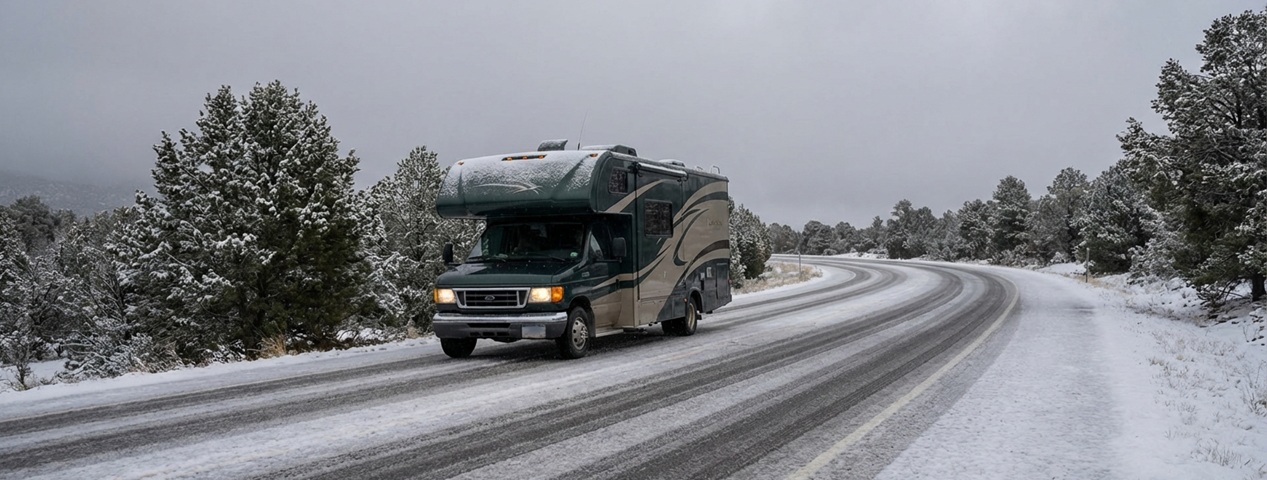
If you do decide to drive, winter conditions tend to expose the handling differences between rigs very quickly.
A truck pulling a trailer or fifth wheel behaves very differently than a motorhome. Weight helps traction but hurts stopping. Trailer brakes can behave unpredictably on slick roads. Jackknifing risk increases when conditions deteriorate, especially during downhill braking.
Paid advertisement.
Class A rigs carry momentum. A lot of it. Air brakes, wide turns, and long stopping distances mean winter conditions demand even more margin. Class B and C rigs feel more nimble, which can lead to overconfidence. Lighter weight can also mean less traction when things get icy.
Different rigs. Same reality.
None of them stop quickly in winter conditions.
Preparation matters more than most people think, and it starts well before you roll.
Tires are the biggest factor. More than drivetrain. More than weight. Cold weather exposes worn tires fast. Tire pressure drops as temperatures fall, so checking it matters. Windshield washer fluid needs to be freeze rated. Wipers need to actually clear ice buildup, not just smear it around.
Fuel matters in winter because everything takes more time. Slower driving, weather delays, and idling can quietly increase consumption.
Route planning matters just as much. Mountain passes change quickly. Shaded areas and bridges freeze first. Overnight lows often tell you more than daytime forecasts. Knowing where you could safely stop if conditions change gives you margin before you need it.
Then there’s the mental side.
Build extra time into the day. Decide ahead of time that pulling over is always an option. Winter driving isn’t about confidence. It’s about margin.
Paid advertisement.
Once you’re moving, the rules are simple but unforgiving.
Slow down earlier than you think you need to. Increase following distance far beyond normal. Brake gently and early. Sudden movements can cause loss of control faster than people expect. Cruise control has no place on slick roads. Steering should feel deliberate, not reactive.
Pay attention to how the rig feels. If steering starts to feel vague or braking response changes, that’s your signal. Wind combined with slick roads is another warning sign. Tension behind the wheel usually means you’ve already stayed out longer than you should.
Knowing when to stop is part of driving well.
Pulling over early is not failure. It’s experience. Most winter mishaps don’t happen because someone didn’t know how to drive. They happen because someone felt pressured to keep going.
Winter RV travel can be done safely. Thousands of people do it every year. But nearly all of the risk comes from pushing conditions instead of respecting them.
Winter doesn’t demand bravery.
It demands patience.
And sometimes, the smartest move is staying warm, making another cup of coffee, and letting the weather pass.
Stay safe out there!