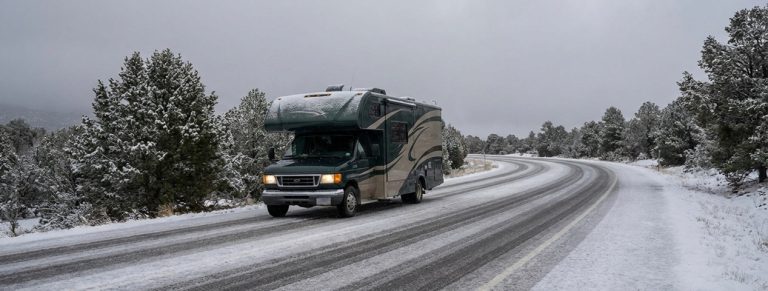
A winter storm can leave more behind than snow on the ground. For RV owners, cold weather, ice, and rapid temperature swings can expose weak points in systems that rarely get tested in fair conditions. A careful check after a storm is less about finding damage and more about catching small issues before they turn into expensive ones.
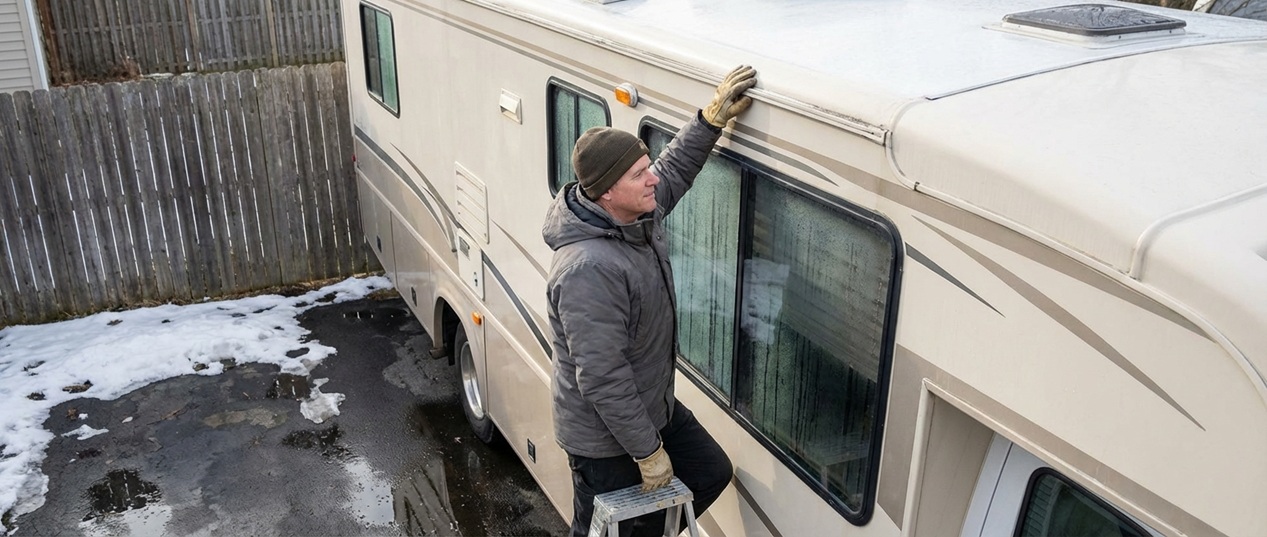
Start at the top. Roof seams, vents, and cap edges take the brunt of snow load and freeze cycles. Even well-maintained sealant can shrink or crack after repeated cold exposure. A visual inspection of roof penetrations and slide-out seals can reveal gaps that may not leak now, but will once moisture returns.
Tires deserve close attention. Cold air causes pressure to drop quickly, and ice buildup can hide sidewall cracking or damage near the bead. Allow tires to return to normal temperature before setting pressure, then inspect for uneven wear or visible cracking that may have worsened during the storm.
Plumbing is another common trouble spot. Even winterized rigs can hold small pockets of water that expand under freezing conditions. Check exterior hoses, low-point drains, city-water connections, and outdoor shower fittings for signs of stress or separation. These failures often appear later, after thawing, when fittings are pressurized again.
Batteries are especially sensitive to cold. Before placing them under load, look for swelling, cracked cases, or corrosion at terminals. Cold cycles can accelerate battery wear, and problems here tend to surface when systems are asked to work harder during early spring travel.
Finally, walk the exterior with an eye for new drafts or seal gaps around windows, doors, and storage compartments. Cold temperatures can cause seals to contract, creating openings that invite moisture once conditions change.
A post-storm inspection doesn’t take long, but it restores confidence. Winter damage is often quiet and gradual. Paying attention now helps ensure the next trip starts with fewer surprises.