Professional RV solar installations are not one-size-fits-all.
Two RVs that look similar on the outside can require very different solar systems depending on how they’re used, what appliances they power, and how long they’re expected to operate without hookups.
This article explains how professional installers size RV solar systems and what factors most strongly influence total project cost. The goal is to help you understand the process and set realistic expectations before speaking with an installer.
How Professional RV Solar Systems Are Sized
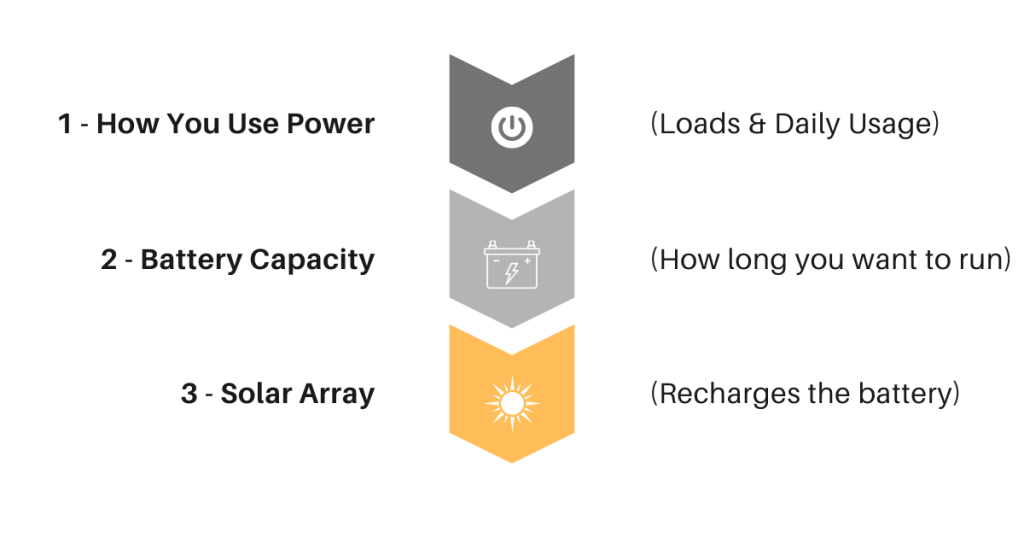
A professionally designed RV solar system is built as an integrated power system, not just a collection of panels on a roof. Installers generally size systems in a specific order to ensure reliability and long-term performance.
Step 1: Understanding How You Use Power
The starting point is not solar panels. It’s how you actually use electricity in your RV.
Installers typically want to understand:
- Which appliances you run regularly
- How long you run them each day
- Whether you plan to power high-draw items like air conditioning, microwaves, induction cooktops, or residential refrigerators
- How often you camp off-grid versus staying at campgrounds
This usage information determines how much energy your system needs to supply on a daily basis.
Step 2: Determining Battery Capacity
Once usage is understood, the next step is determining battery capacity.
Battery capacity defines:
- How much energy you can store
- How long you can operate without solar input or shore power
- How stable your system feels during cloudy days or periods of higher usage
In professional installations, battery capacity is often the foundation of the entire system. Solar panels are then sized to keep that battery charged.
If battery capacity is too small, energy has nowhere to be stored. On the other hand, a well-sized battery bank with insufficient solar may recharge too slowly. Both situations lead to frustration.
A common misconception is that adding more solar panels alone will solve power limitations.
Step 3: Sizing Solar to Recharge the Battery
Solar panels are sized to reliably recharge the battery bank based on:
- Battery capacity
- Typical daily energy usage
- Available roof space
- Expected sun exposure and seasonal variation
- Real-world system losses
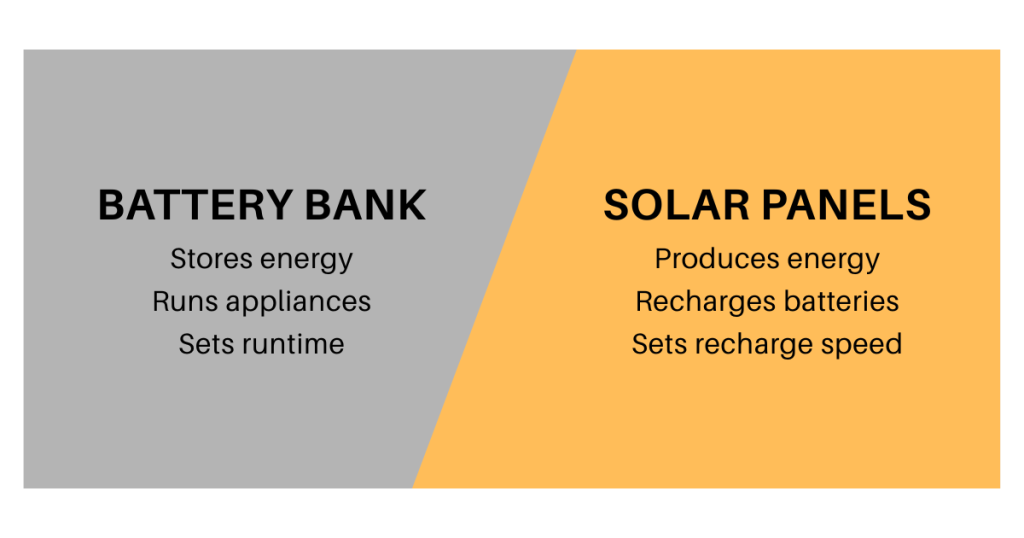
Solar’s primary role is to refill storage, not directly power everything in real time. This is why professional installers treat solar sizing as a function of battery design, not the other way around.
Batteries determine how long you can operate. Solar determines how quickly you recover energy.
The Core Components of a Professional RV Solar Installation
A professional RV solar system includes several major components that must work together safely and efficiently.
Battery Bank
The battery bank stores energy for use when solar or shore power is unavailable. Battery type and capacity are usually the single biggest cost driver in an RV solar install.
Inverter and Charger
The inverter converts battery power into usable AC power for household appliances. In many systems, the inverter and charger are integrated into a single unit that manages charging from solar, shore power, or generators.
Solar Array
Solar panels provide the energy input to recharge the battery. Panel quantity, wattage, roof layout, and mounting method all affect system design.

System Integration and Safety
Professional installs include proper wiring, fusing, monitoring, and safety considerations. Integration complexity varies depending on the RV’s existing electrical layout.
A professionally designed system is meant to function as a cohesive whole, not as individual components added over time.
What Typically Drives the Cost of an RV Solar Installation
RV solar installation costs vary widely, but they are generally driven by a few key factors.
Battery Capacity
Larger battery banks increase cost due to:
- Battery hardware
- Supporting equipment
- Additional labor and system integration
Inverter Size and Complexity
Higher-capacity inverters capable of running large loads add cost and may require upgrades elsewhere in the electrical system.
Installation Complexity
Costs increase when installs involve:
- Long wiring runs
- Custom mounting solutions
- Tight or difficult access areas
- Complex integration with existing electrical components
Two RVs with similar roof space can have very different system costs depending on battery capacity, inverter size, and installation complexity.
Typical Professional Install Ranges
While every RV is different, professionally installed RV solar systems commonly fall into these broad ranges:
- Smaller systems: lower thousands
- Mid-range systems: mid thousands
- Larger, high-capacity systems: higher thousands
Two RVs with similar roof space can have very different system costs depending on battery capacity, inverter size, and installation complexity.
What to Have Ready When You’re Ready to Move Forward
When you decide to explore a professional installation, having the following information ready will help installers provide accurate guidance:
- How you typically camp and travel
- Which appliances matter most to you
- How long you want to operate without hookups
- Any known roof space or shading limitations
- A general comfort range for budget
- Your expected timeline
Clear answers lead to better system designs that reflect real-world needs, not theoretical capacity.
How RV Solar Quotes Fits In
RV Solar Quotes helps RV owners connect with qualified professional installers when they’re ready to explore installation options.
Whether you’re still gathering information or preparing to move forward, understanding how systems are sized and priced makes conversations with installers far more productive.
When you’re ready, RV Solar Quotes can help point you in the right direction based on your goals, location, and timeline.